
FILMS
Thermoforming films
Flexible thermoforming films are produced on modern equipment using polyamide (PA), polypropylene (PP) and polyethylene (PE) compositions, with an EVOH layer. These structures provide a high barrier to oxygen, modified-atmosphere gases and water vapour.
Contact us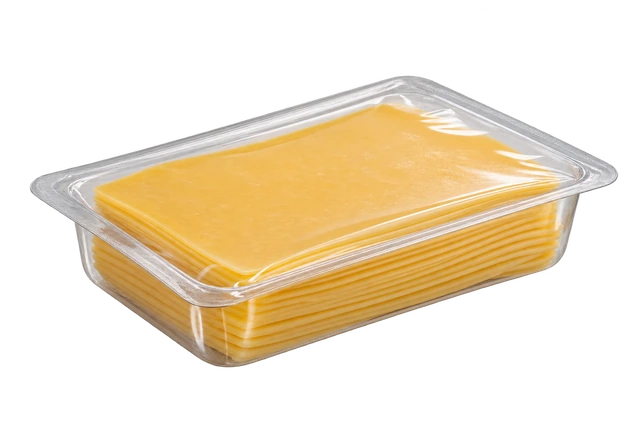
Properties and applications
| Material structures | PA/PE, PP/PA/PE, PA/EVOH/PE |
|---|---|
| Top film thickness, µm | 50–120 |
| Bottom film thickness, µm | 80–300 |
| Properties | Easy peel, reclosable packaging, coloured and clear versions. |
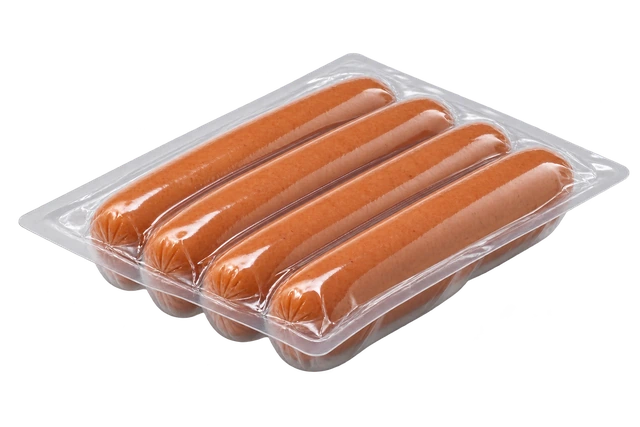
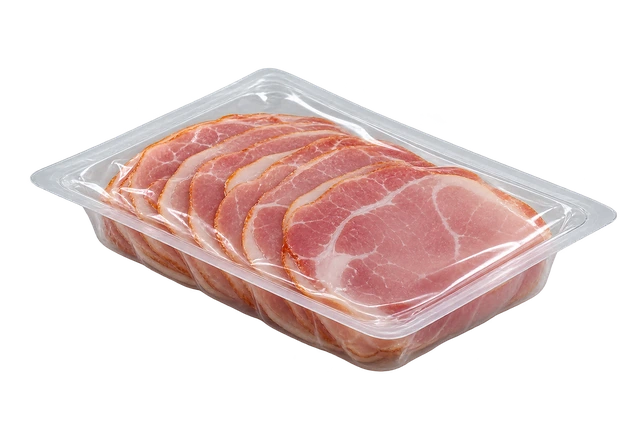
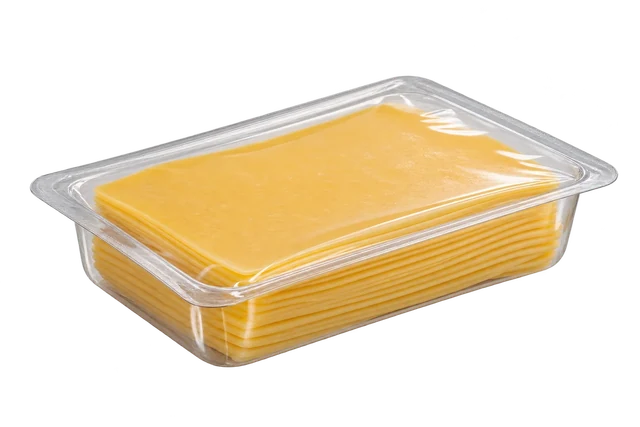
| Applications | Meat and sausage products, hard and fresh cheeses, fish, seafood, bakery products and medical products. |
| Benefits | Good sealability, a barrier to oxygen, water vapour and aromas, high clarity and gloss, and efficient packaging. |
Features and options
 Easy peelPeel — the seal opens by peeling the film away from its base without scissors. Easy peel alone does not mean the pack can be reclosed.
 Anti-fog protectionAnti-fog reduces misting: condensation spreads into a thin layer rather than small droplets, keeping the product easier to see.
 Deep freezingThe material retains the required properties during freezing and low-temperature storage. Its working temperature range depends on the material structure.
 Reverse printingThe printed image is enclosed between the layers of a laminated film. The outer layer protects the print from abrasion.
 Surface printingThe image is printed on the outer surface of the film. A protective coating can be applied when required.
 Reclosable packagingReclosable / re-peel — the pack can be opened and closed again by pressing the film onto the resealing area. This does not restore the original vacuum.
 Sterilisation — up to 134 °CHigh-temperature treatment of the packed product to destroy microorganisms, including spores. The process must suit both the product and the packaging material.
 PasteurisationControlled heating of the packed product to reduce microorganisms. Temperature and duration are selected for the product and its packaging.
 Oven use — 220 °CThe material is suitable for oven heating under specified conditions. Check the permitted temperature and duration for the particular material.
Application examples
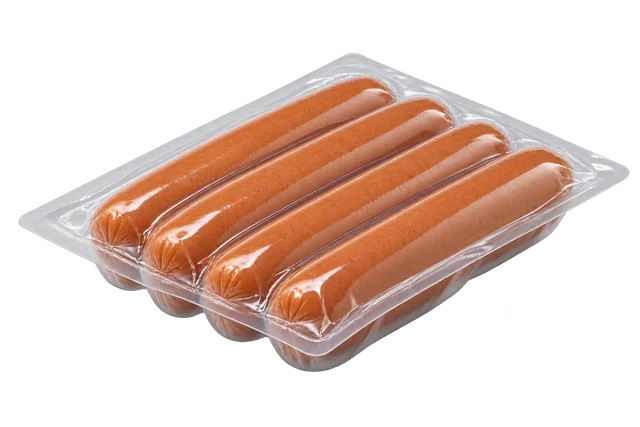
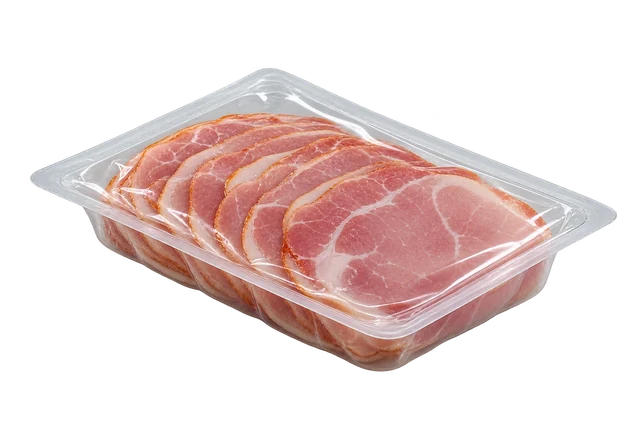
What to consider when selecting a material
Select thermoforming top and bottom films as a pair. Specify forming depth, cavity dimensions, the product and line model. This allows forming, sealing and compatibility with the required vacuum or modified-atmosphere process to be checked.
Selection questions
Why are top and bottom films needed?
The bottom film forms the pack base and the top film closes it. Select them as a compatible pair for the particular line and product.
How does forming depth affect selection?
Forming depth and geometry affect material distribution in the finished pack. Check structure and thickness in the required format, including at the corners.
Can one film be used on different lines?
Check each line’s roll width, tooling, forming process and sealing settings. The same material name does not guarantee the same operating settings.
What information is needed to choose thickness?
Provide product dimensions, forming depth, cavity format and pack-handling conditions. Confirm the choice by trialling the finished pack.
Can print and special properties be specified?
Agree these requirements for the particular top or bottom film. Consider printing, opening features and processing conditions together with line operation.
Send us an enquiry
Leave a phone number or an email address — one contact method is enough.