
FILMS
Clear barrier and printed films
Laminated films meet food-industry packaging requirements through high barrier performance, quality printing and a glossy finish. They allow packaging to be selected for the product's requirements.
Contact us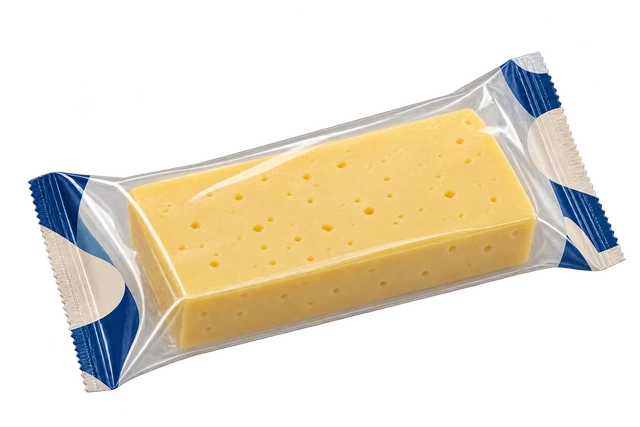
Properties and applications
| Material structures |
|
|---|---|
| Thickness, µm | 45–95 |
| Width, mm | 150–1200 |
| Properties | PE sealing layer, high barrier performance and easy peel. |
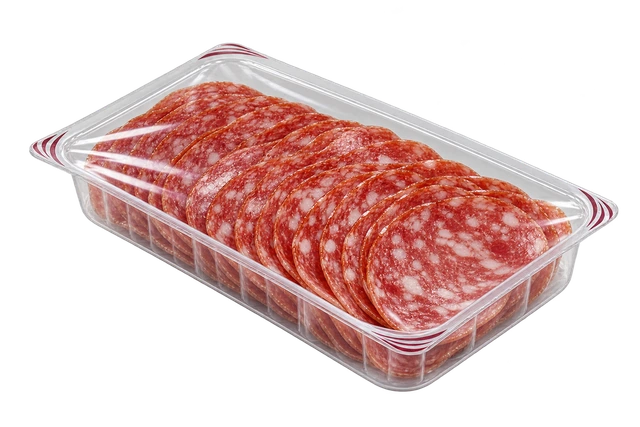
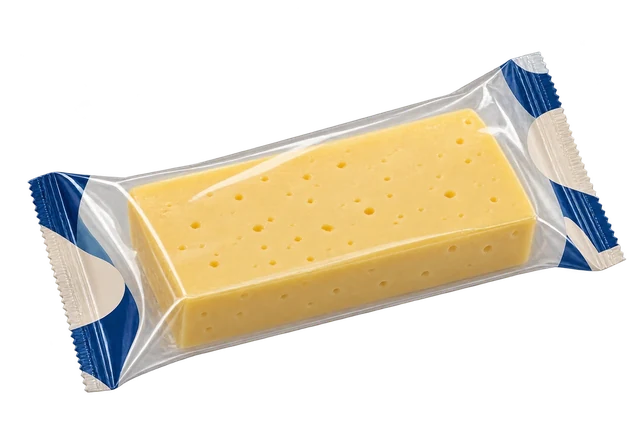
| Applications | Meat and sausage products, hard cheeses, fish, seafood, bakery products and medical products. |
| Packaging systems |
|
| Benefits | Good sealability, a high barrier to oxygen, water vapour and aromas, high clarity and gloss, and efficient packaging. |
Features and options
 Easy peelPeel — the seal opens by peeling the film away from its base without scissors. Easy peel alone does not mean the pack can be reclosed.
 Anti-fog protectionAnti-fog reduces misting: condensation spreads into a thin layer rather than small droplets, keeping the product easier to see.
 Reverse printingThe printed image is enclosed between the layers of a laminated film. The outer layer protects the print from abrasion.
 Surface printingThe image is printed on the outer surface of the film. A protective coating can be applied when required.
 Rotogravure printingGravure printing uses engraved cylinders to reproduce fine details, rich colours and smooth tonal transitions.
 High puncture resistanceIncreased resistance to punctures and mechanical damage. Material thickness and structure are selected for the product’s shape.
 Sterilisation — up to 134 °CHigh-temperature treatment of the packed product to destroy microorganisms, including spores. The process must suit both the product and the packaging material.
 PasteurisationControlled heating of the packed product to reduce microorganisms. Temperature and duration are selected for the product and its packaging.
 Oven use — 220 °CThe material is suitable for oven heating under specified conditions. Check the permitted temperature and duration for the particular material.
Application examples
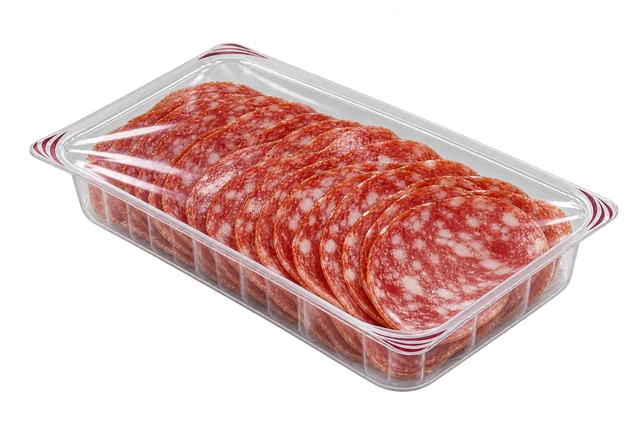
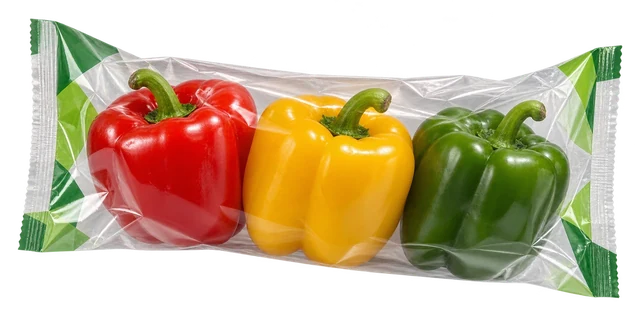
What to consider when selecting a material
For laminated film, first identify the system: tray lidding, top film for a thermoforming line or Flow-pack. Selection requires the sealing-base material, roll width, storage conditions and printing requirements. Barrier performance and easy peel are confirmed for the specific structure.
Selection questions
What are laminated films used for?
Their multilayer structure is selected for the packaging process and product requirements. For lidding applications, also check compatibility with the bottom film or tray.
How do barrier structures differ?
They can have different permeability, strength and sealing properties. Compare the relevant material specifications against the product and its intended use.
Can print be placed between film layers?
Interlayer printing can be specified in suitable laminated structures. Agree the construction, artwork and position for the selected material.
How is a lidding film selected for a tray?
Provide the tray material and dimensions, traysealer model and seal requirements. Verify film-to-tray compatibility under the intended operating conditions.
Is every laminated film suitable for heating?
No. The specific material structure determines the permitted processing conditions. State any heating or freezing requirements during material selection.
Send us an enquiry
Leave a phone number or an email address — one contact method is enough.