
FILMS
Polyolefin films
Cross-linked polyolefin (POF) shrink films are a versatile material for products of different shapes on semi-automatic and high-speed automatic Flow-pack lines. Suitable for a wide range of food and non-food products.
Contact us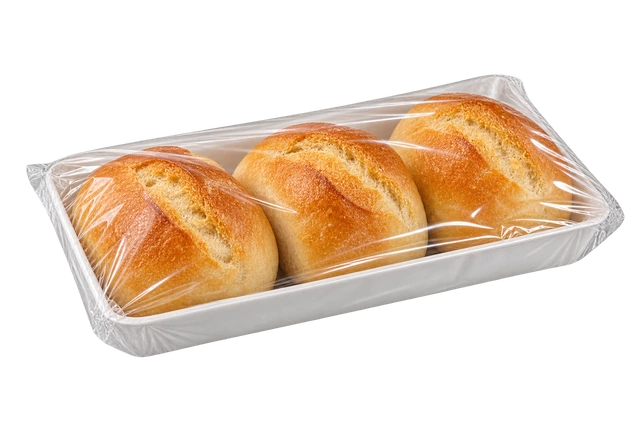
About the material
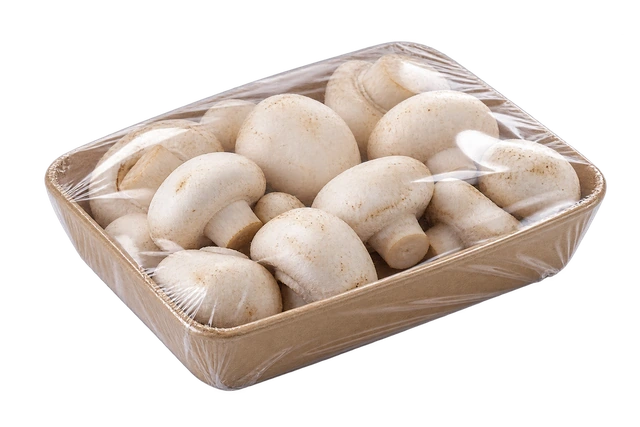
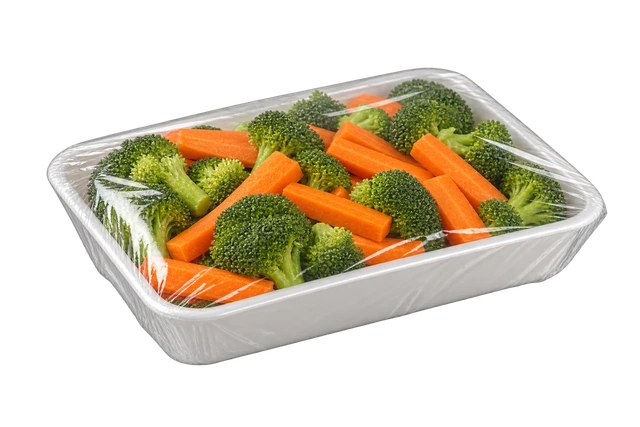
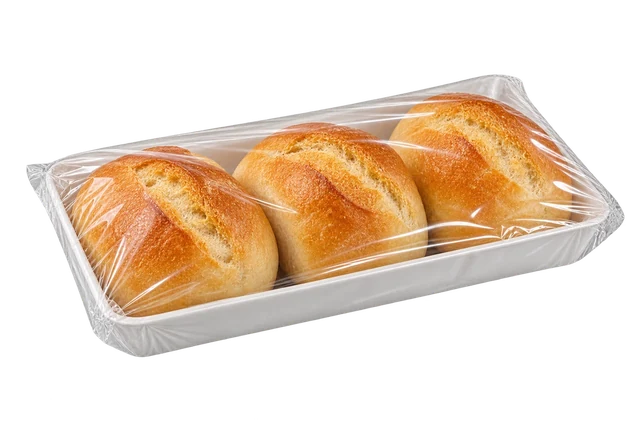
The enhanced elasticity of polyolefin films supports a wide range of applications. Unlike PVC films, they allow products to be packed without deformation: grouped egg trays, stationery, magazines, brochures, products on thin backing boards and in containers, vegetables, bread and other foods.
POF films are based on polyethylene (PE). Unlike PVC films, they do not release toxic chlorine or vinyl fumes during shrinking and do not affect the taste of the packed food.
Properties and applications
| Food products |
|
|---|---|
| Non-food products |
|
| Benefits and available formats |
|
Features and options
 Anti-fog protectionAnti-fog reduces misting: condensation spreads into a thin layer rather than small droplets, keeping the product easier to see.
 Surface printingThe image is printed on the outer surface of the film. A protective coating can be applied when required.
 High puncture resistanceIncreased resistance to punctures and mechanical damage. Material thickness and structure are selected for the product’s shape.
Application examples
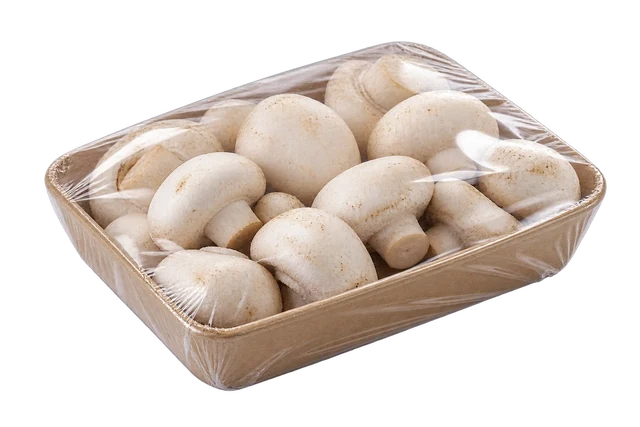
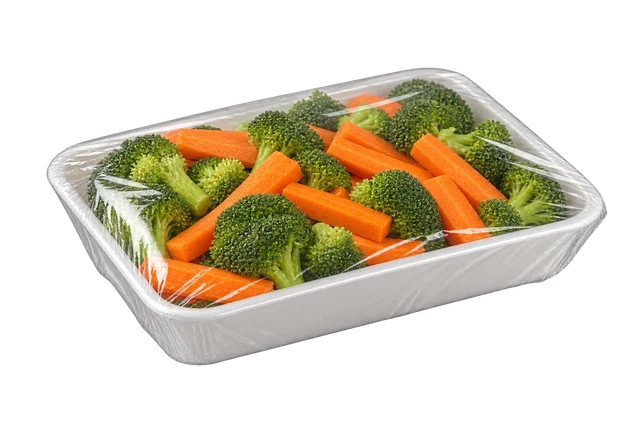
What to consider when selecting a material
For polyolefin film, specify product dimensions, the sealing method and shrink equipment. State whether individual or multipack wrapping, perforation or centre-folded film is needed. Film format and machine settings are selected for the product.
Selection questions
What is polyolefin film used for?
It is used for shrink wrapping products on compatible equipment. Select the required format for the item’s dimensions and shape.
Can it replace a barrier vacuum bag?
Do not treat these materials as interchangeable. Shrink wrapping and barrier vacuum packaging serve different purposes.
How are thickness and format selected?
Consider product dimensions, weight and shape, pack stresses and equipment. Verify the selection on the finished wrapped item.
Can previous shrink-tunnel settings be retained?
Trial the new material in the process. Match sealing and shrinking settings to the specific film and product.
How should sharp product edges be considered?
Assess the risk of film damage during wrapping and handling. Discuss product geometry and protection requirements before selecting the material.
Send us an enquiry
Leave a phone number or an email address — one contact method is enough.